The Cost of Fragmented Tool Management in Modern CAM
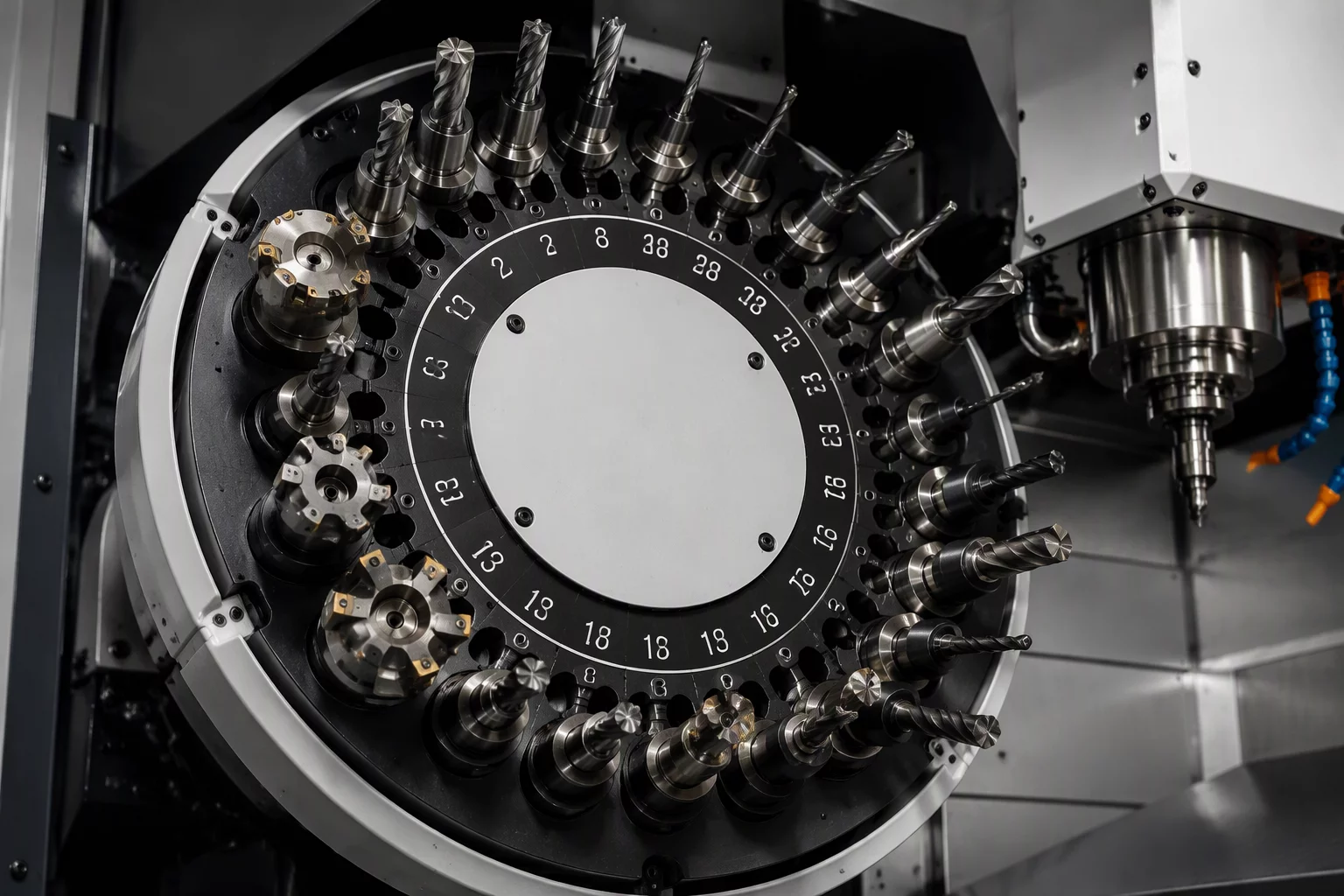
On high-mix milling setups and rapid-cycle production runs, non-cutting spindle transfers consistently siphon away machining margins. Every automatic tool change commands an unavoidable penalty: the Z-axis retracts to tool change height, the spindle orients, mechanical pots tilt, gripper arms shuttle, and the CNC controller verifies spindle orientation before bringing the subsequent tool to safe approach planes. In complex components containing multiple step-downs and varied pocket depths, programming on an isolated feature-by-feature basis forces identical end mills into the spindle five or six discrete times across a single part cycle.
Minimizing tool changes demands moving beyond localized pocket logic into global toolpath grouping. Instead of finishing a complete visual boss or pocket before progressing, the programmer must enforce tool-centric passes across all eligible features. When a 12mm bullnose rougher enters the spindle, it must clear material across primary pockets, exterior step contours, and rough flange regions before handing the job off to secondary cutters.
Systematic Rules for Consolidating Operations
Executing continuous machining with minimal tool changes relies on strict boundary awareness, clearance plane discipline, and stock model coherence. In Mastercam 2026.R2 and 2027 workflows, sorting by tool group requires establishing clear hierarchy limits:
- Exhaust Bulk Engagement: Ensure heavy roughing cutters clear all roughing volumes and intermediate steps across the entire part envelope before indexing down to smaller stepover tooling.
- Consolidate Holemaking Geometries: Perform spot drilling, tapping drill operations, and chamfers across all identical bore patterns in unified clusters rather than feature clusters.
- Preserve Thin-Wall Structural Integrity: While grouping saves tool change overhead, never compromise structural floor stability by finishing deep pockets before neighbouring cores are sufficiently roughed.
Modern machine controls also benefit substantially from reduced mechanical wear. By cutting tool changes from 38 down to 14 across a 45-minute cycle, you eliminate hundreds of mechanical shuttle cycles daily, extending pneumatic gripper lifespan and cutting thermal variations induced by idle spindle waiting states.