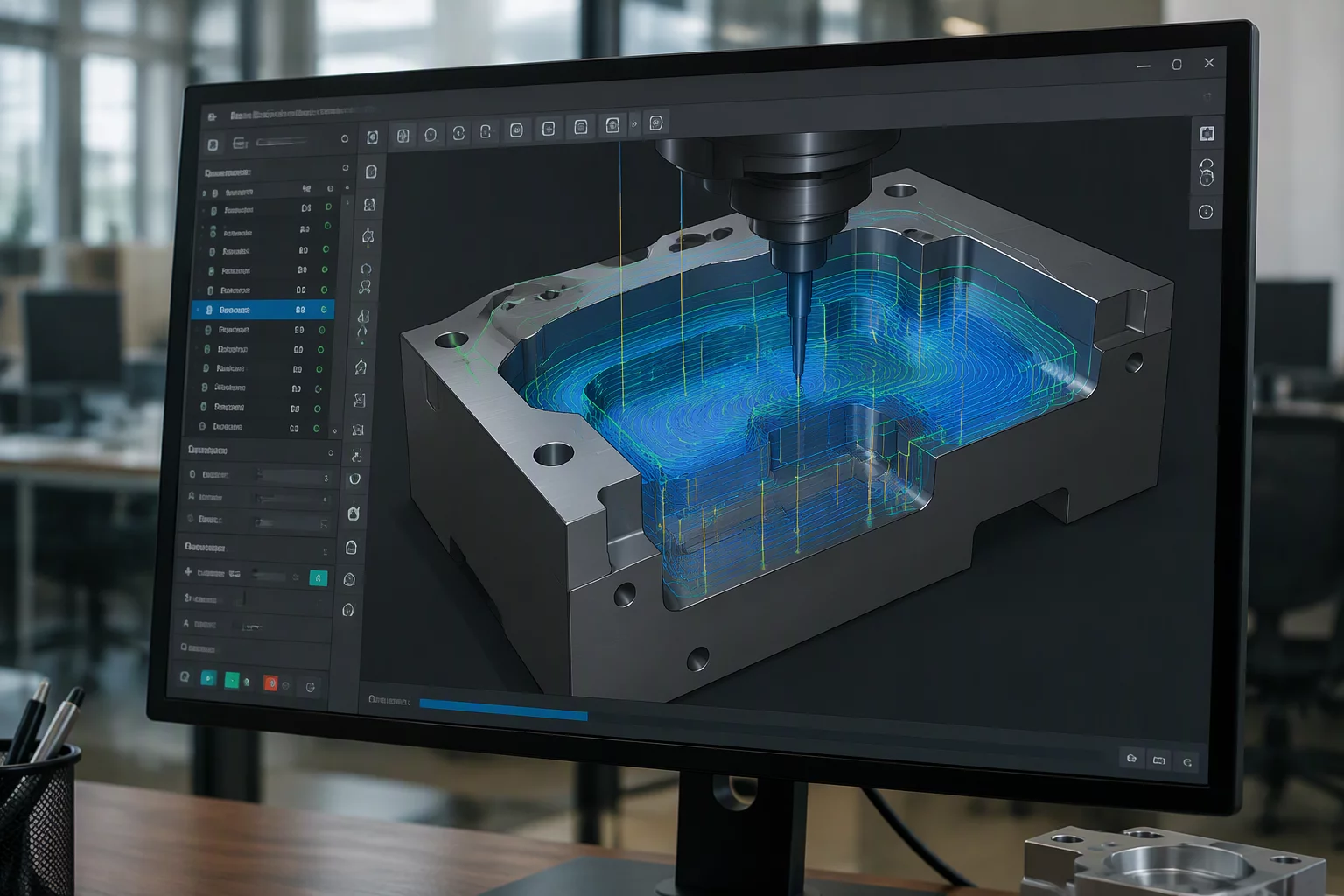
Mechanics of Volumetric Stock Evacuation
Heavy stock evacuation demands deterministic control over radial immersion and dynamic stepover. When roughing solid steel or billet aluminum, maintaining an invariant tool engagement angle prevents shock loads from fracturing carbide inserts. Modern CAM algorithms compute trochoidal arcs and continuous corner roll-ins rather than executing legacy rectangular stepover patterns that spike cutting forces inside interior corners.
The primary driver of volumetric material removal rate (MRR) lies in balancing axial depth against radial width of cut. Utilizing large axial engagement alongside modest radial stepover distributes heat across the entire cutting flute length, minimizing localized thermal failure and extending predictable cutter life across high-volume production runs.
Operational Safeguards for High-Feed Cavity Clearing
Applying high metal removal parameters inside deep pockets introduces aggressive chip evacuation challenges. Failure to evacuate chips immediately leads to re-cutting, instantaneous cutter binding, and catastrophic surface gouging before secondary roughing stages commence.
- Maintain high-pressure through-spindle air blast or coolant jets directed at the shearing zone to evacuate chips from deep pockets instantly.
- Program continuous ramping or helical entries between 1.5° and 3.0° to eliminate vertical plunge shock against solid floor boundaries.
- Establish radial chip thinning compensations automatically inside Mastercam to ensure chip thickness matches programmed tool feed rates.
By standardizing volumetric roughing sequences across production setups, CNC programmers ensure baseline stability before applying intermediate rest-milling routines or wall finishing passes.