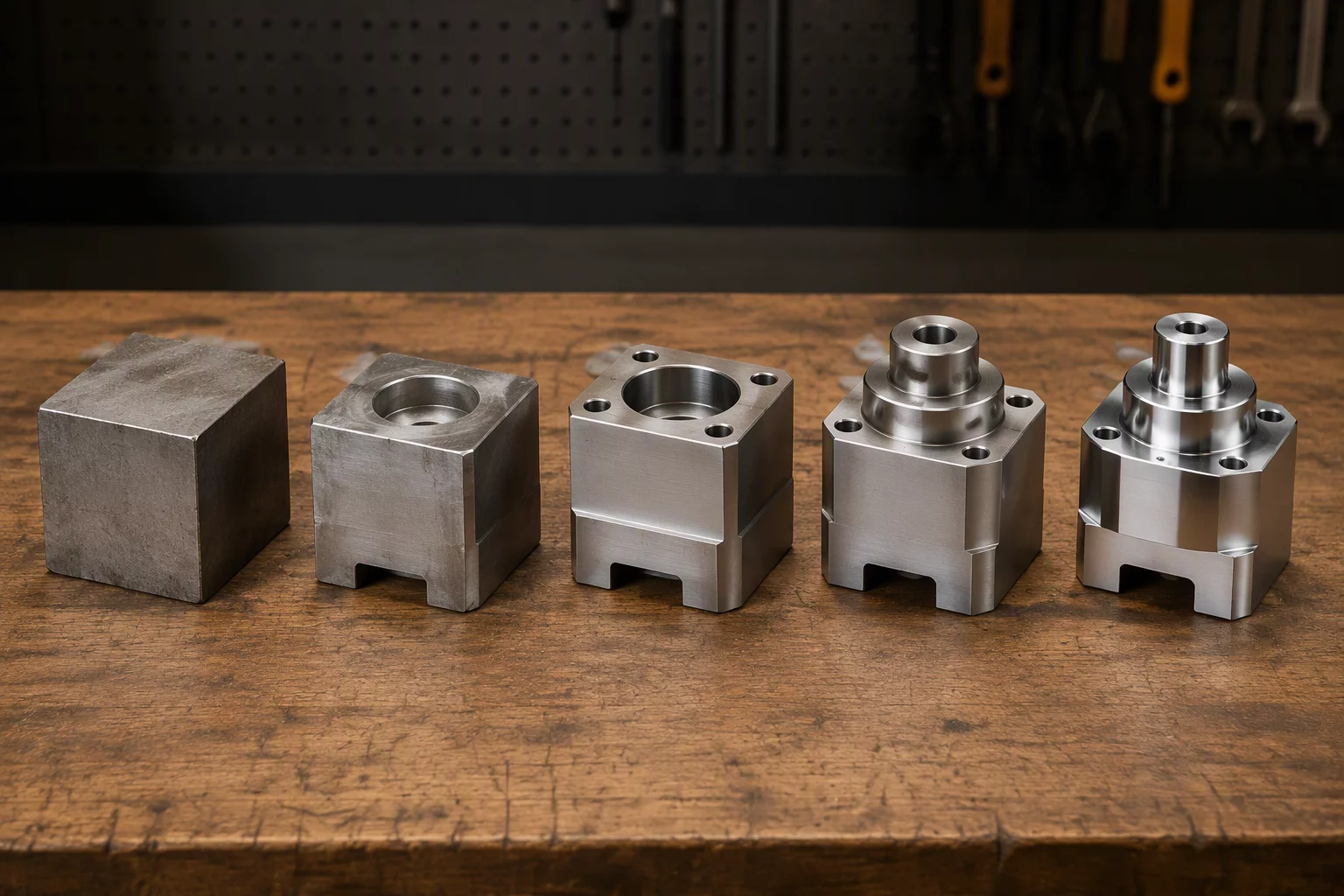
Why a Toolpath Name Falls Short of Explaining a Process
A toolpath name is a label, not an explanation. When a CAM operation is titled "Pocket Rough" or "Contour Finish," that string communicates the toolpath strategy the cutter will follow, but it says nothing about why that strategy was selected at this point in the sequence, what stock state it assumes on entry, or which downstream operations depend on the geometry it leaves behind. A reviewer opening the file six months later sees the name and nothing more, and is left to reverse-engineer the programmer's reasoning from geometry and parameters alone.
The gap between a name and an explanation becomes acute in production environments where programs are handed between shifts, revisited for engineering change orders, or audited against a process routing sheet. A "Rest Mill" operation might be clearing residual stock after a roughing pass, or it might be machining a feature that could only be reached once a neighboring wall was thinned. Without explicit notes, those two scenarios are indistinguishable from the toolpath name, yet they carry entirely different setup constraints, inspection criteria, and rework implications.
What a Process Explanation Must Capture
To elevate a toolpath name into a genuine process explanation, the programmer must document three categories of information that the name itself cannot convey. These are the reasoning behind operation selection, the stock assumptions at entry, and the sequence dependencies that govern ordering:
- State the rationale for choosing this strategy over alternatives, including the geometric, thermal, or access constraint that made it the correct choice at this stage.
- Record the assumed in-process stock volume on entry, noting which prior operation produced it and whether a stock model reconciliation was performed.
- Identify the downstream operations that consume this operation's output, so that any change to parameters or ordering triggers a documented dependency review.
When these three elements accompany every operation, the program becomes self-documenting. A new programmer can trace the logic from raw stock to finished surface without guessing, and an auditor can verify that each step satisfies the process plan rather than merely occupying a slot in the toolpath tree.