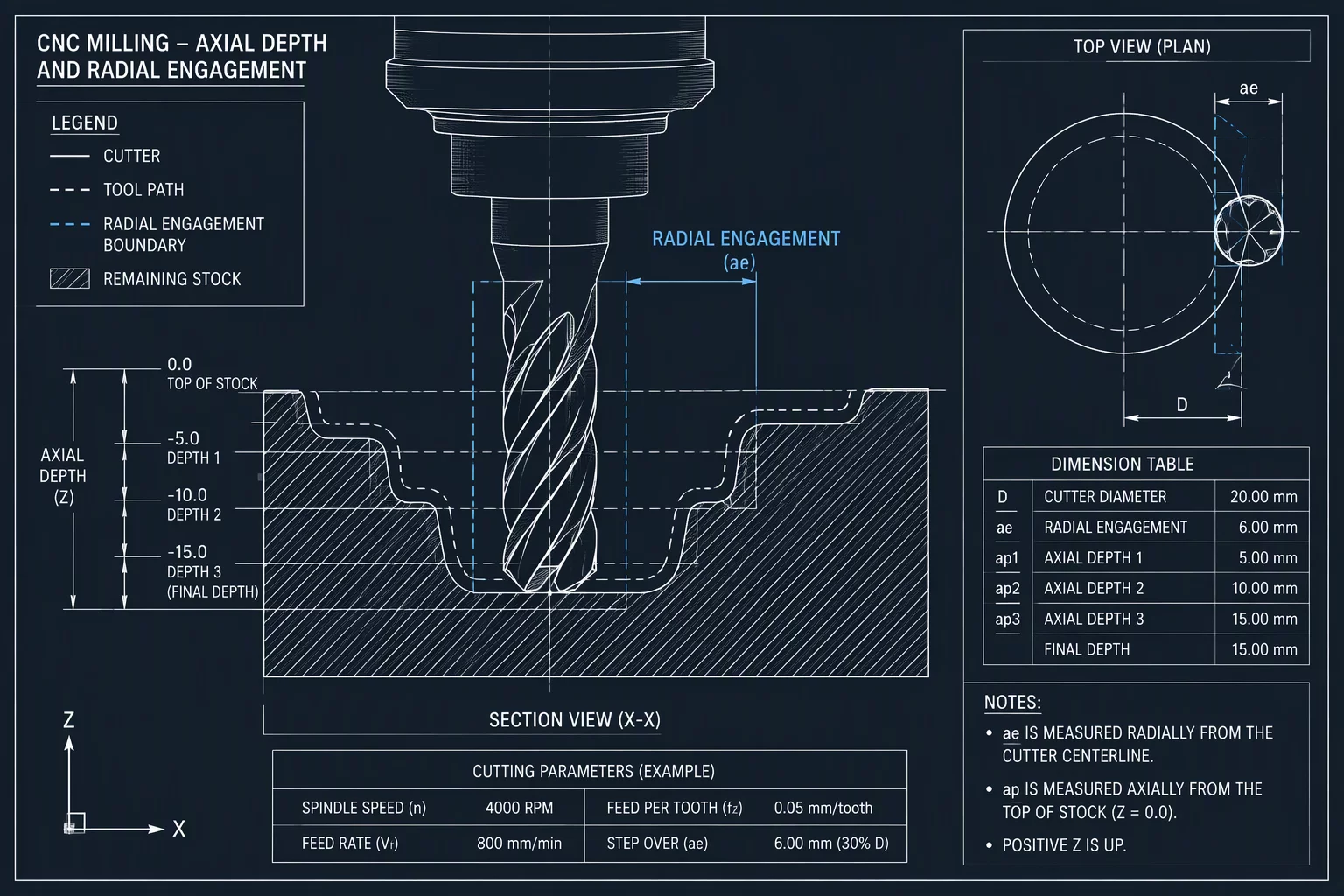
Calibrating Cutter Engagement from In-Process Stock
When solid carbide tools enter non-uniform stock remnants, unpredictable spikes in radial engagement trigger severe tool deflection and spindle chatter. In Mastercam 2026.R2 and Mastercam 2027, the CAM calculation engine parses previous tool footprints to accurately compute remaining material envelopes. By projecting the cutting flute contact area against this dynamic stock boundary, programmers establish uniform cutting conditions across complex pocket walls and steep fillets.
Relying on raw nominal CAD geometry rather than in-process stock models invariably causes premature insert chipping. In titanium 6Al-4V and hardened tool steels, variations in remnant stock create sudden shifts from light skimming to full-slot burying. Incorporating an active stock model directly into toolpath generation forces the software to calculate exact axial depths of cut, ensuring predictable cutter loads and sustained chip thickness throughout each pass.
Core Principles for Predicting Stable Cut Depths
Accurately forecasting cut depths requires structuring the CAM sequence so every semi-finishing toolpath references an updated stock mesh. Machinists maintain cutter integrity across difficult alloys by applying three operational controls:
- Generate intermediate in-process stock models after heavy bulk roughing to expose corner material accumulation before finishing.
- Cap maximum radial stepover between 8% and 12% of tool diameter to safeguard against dynamic deflection spikes in internal corners.
- Verify flute engagement angles across 3D transitional moves so feed rates scale dynamically when the cutter approaches pocket corners.
Standardizing these cut depth expectations produces whisper-quiet machining passes, eliminating operator reliance on manual feed override dials. Predictable chip loads protect carbide cutting edges, extend spindle bearing life, and yield consistent surface geometry for downstream finishing passes.