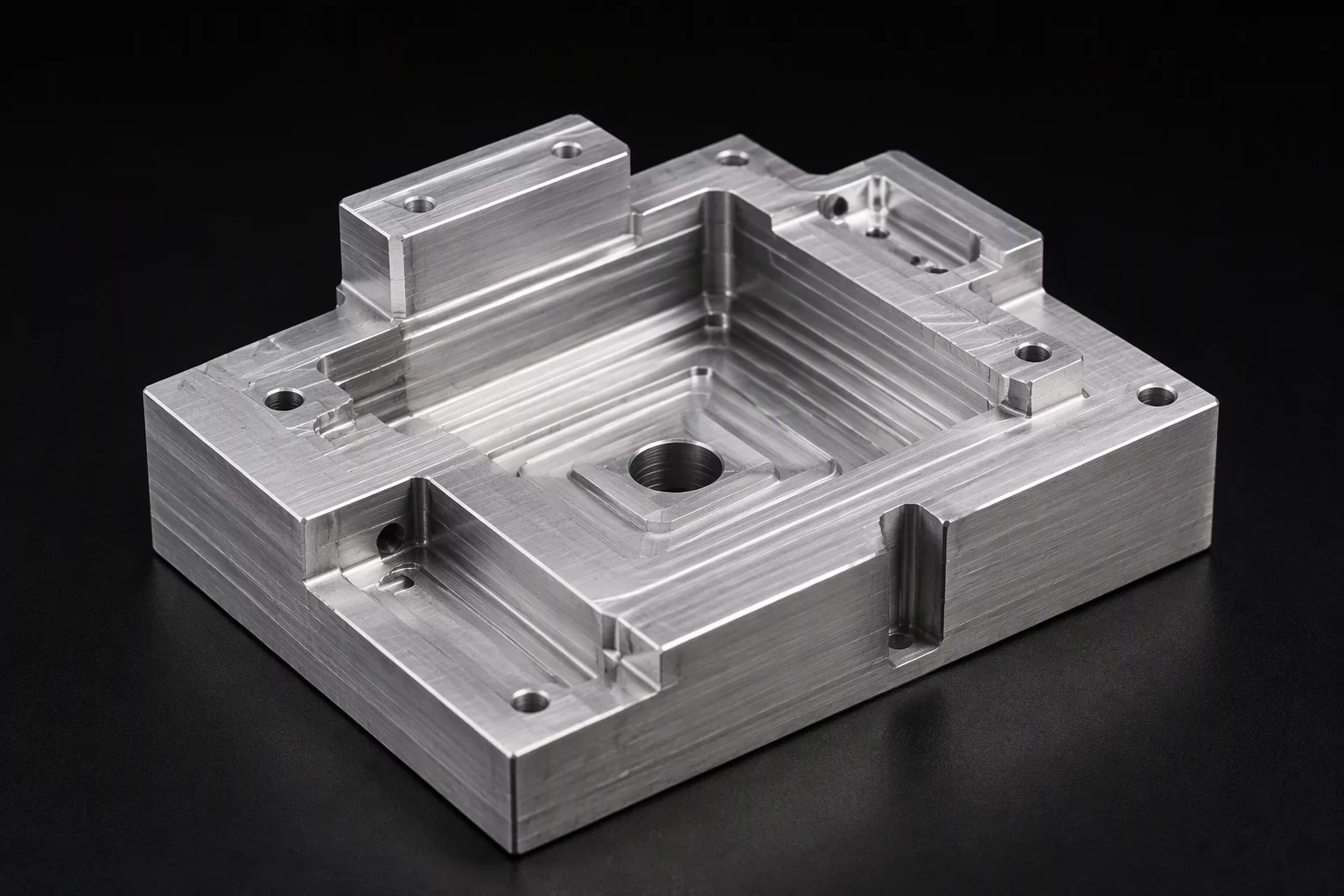
The Role of Calibrated Stock in Dimensional Accuracy
In aggressive metal removal routines, operators often focus solely on volumetric efficiency and rapid cycle times. However, cutting directly to blueprint nominal dimensions during initial roughing stages introduces severe cutter deflection, localized thermal stresses, and work-hardening of the parent alloy. Establishing a calibrated stock cushion across both planar floors and vertical profiles isolates critical part geometry from extreme tool forces, creating a reliable foundation for final precision passes.
Modern dynamic milling toolpaths generate fluctuating radial loads that cause slight tool deflection away from dense material regions. If a roughing end mill operates without sufficient stock offset, cutter deflection pushes the flute envelope past the finish profile boundary, permanently gouging the component. Intentionally preserving an offset of unmachined material ensures that roughing variances never penetrate the final finished part envelope.
Core Implementation Rules for Floor and Wall Stock
Proper stock allocation requires tuning offsets to specific tool diameters, feature depths, and machine rigidity rather than defaulting to arbitrary global values. When programmers implement differentiated stock parameters across complex geometries, cycle repeatability improves substantially across the shop floor:
- Separate wall and floor offsets to prevent axial tool deflection from bleeding into sidewall chatter patterns.
- Target a radial finish stock allowance between 8% and 12% of the finishing tool diameter to maintain consistent chip load beneath the work-hardened surface layer.
- Deploy intermediate semi-finishing toolpaths whenever roughing stepovers leave residual material scallops exceeding twice the target finish cut depth.
With intentional stock buffers in place, the finishing tool maintains constant radial engagement, uniform deflection, and predictable tool life across long production runs.