Internal Radii Dynamics and Abrupt Load Management
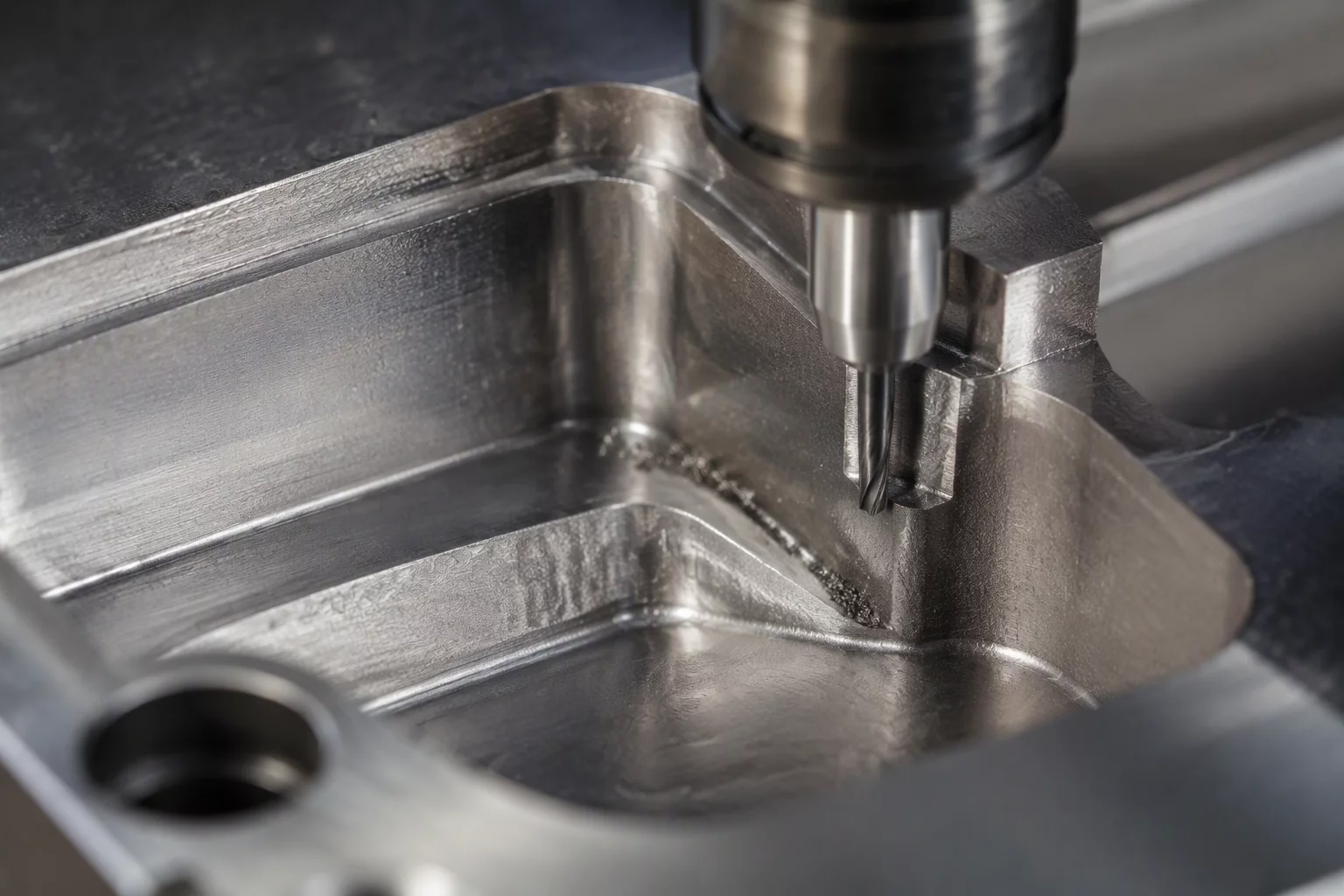
When high-volume roughing tools clear internal pocket geometry, the cutter radius dictates the minimum curvature left behind. In sharp 90-degree cavity transitions, this geometric mismatch creates concentrated triangular cusps of unmachined material in every corner. Forcing a delicate finishing tool into these unaddressed remnants causes its radial tool engagement angle to spike instantaneously from a nominal 8-12 percent up to 90 degrees or full slotting engagement.
This instantaneous rise in cutting forces triggers tool deflection, chatter marks, and accelerated chipping along solid carbide flute corners. Addressing corner material buildup safely requires programming dedicated rest roughing or corner-clearing passes that remove the bulk of these localized remnants before semi-finishing or final profiling occurs. Mastercam 2026.R2 and 2027 rest milling algorithms allow engineers to reference previous operation stock models to systematically peck, peel, or trochoidally mill away these corner cusps without overloading slender cutters.
Strategic Rest Milling Protocols for Internal Corners
Executing safe corner remnant cleanup requires strict adherence to progressive stepping rules and cutter path dynamics:
- Step down cutter diameters incrementally so the ratio between consecutive tool diameters never exceeds 2:1, preventing severe radial binding in the corner root.
- Implement dynamic peel milling or tangential circular lead-ins rather than linear plunge passes directly into the corner apex.
- Verify residual in-process stock thickness in CAM verification to ensure leftover corner envelopes match nominal wall finish allowances within 0.05 mm.
Isolating corner stock removal into an explicit intermediate operation protects finishing tooling, stabilizes cutting acoustics, and guarantees uniform wall deflection during final passes. By eliminating engagement spikes before they happen, CNC machinists achieve tight part tolerances and pristine surface textures on challenging internal profiles.